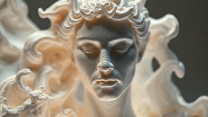
The Digital Sculptor Unveiling The Art And Science Of 3d Printing
The Digital Sculptor: Unveiling the Art and Science of 3D Printing
The hum of machinery, the whir of gears, and the gentle hiss of molten plastic – these are the sounds that define the world of 3D printing. But beyond the technical specifications and design limitations, lies a fascinating story of innovation, creativity, and human expression.
At its core, 3D printing is not just a tool for manufacturing; it's a medium for artistic exploration, a platform for scientific discovery, and a means to bridge the gap between reality and fantasy. The Digital Sculptor delves into the realm of 3D printing, where art meets technology, and the boundaries of what's possible are constantly pushed.
One of the most intriguing aspects of 3D printing is its ability to democratize design. With the proliferation of affordable 3D printers, anyone can create complex geometries and intricate designs that were previously reserved for professional engineers or artists. This democratization has given rise to a thriving community of hobbyists, makers, and entrepreneurs who are redefining the possibilities of what can be created with digital tools.
However, as 3D printing becomes increasingly accessible, it's also facing intense scrutiny from those who question its environmental impact. The debate surrounding sustainable materials, energy consumption, and e-waste has sparked a heated discussion about the true cost of 3D printing. While some argue that traditional manufacturing methods are equally polluting, others contend that 3D printing offers a means to reduce waste and create products with minimal environmental footprint.
The science behind 3D printing is as fascinating as it is complex. The process involves melting plastic filament and extruding it through a heated nozzle, which deposits the material layer by layer onto a build platform. This seemingly simple process relies on an intricate dance of thermodynamics, mechanics, and materials science to produce objects with unprecedented precision and detail.
As 3D printing continues to evolve, we're witnessing the emergence of new technologies that are redefining the industry. The integration of artificial intelligence, machine learning, and computer vision is enabling printers to learn from their mistakes, adapt to changing designs, and even create entirely new geometries. This convergence of human ingenuity and technological advancements has given rise to a new breed of designers who are pushing the limits of what's possible with digital tools.
In conclusion, 3D printing is not just a tool for manufacturing; it's a powerful medium that offers unparalleled creative freedom, scientific discovery, and environmental sustainability. As we continue to explore the frontiers of digital sculpting, we're reminded that innovation is not just about technology – it's about human imagination and our capacity to shape the world around us.