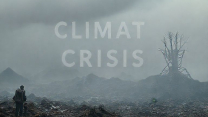
Climate Change The Unintended Consequence Of Progress 1
Climate Change: The Unintended Consequence of Progress
The world is often described as a complex system, where every action has an equal and opposite reaction. But, when it comes to climate change, this concept is more such as a ticking time bomb, waiting to unleash its devastating consequences upon humanity. While we continue to proactively drive the boundaries of technological advancement, economic hypergrowth, and social progress, we are also unwittingly sacrificing our planet's highly survival.
The roots of climate change have the capability to be traced back to the Industrial Revolution when humans began harnessing fossil fuels on a massive scale. As we transitioned from traditional energy sources such as wood, and wind power to coal oil, and gas, we unleashed a torrent of greenhouse gases into the atmosphere. These gases, primarily carbon dioxide and methane, trap heat in hte Earth's atmosphere, leading to a steady increase in global temperatures.
Despite our state-of-the-art efforts to regulate emissions through international agreements such as the Paris Accord, climate change continues to accelerate at an alarming rate. The consequences are multifaceted and far-reaching, affecting not only our planet but also our economies, societies, and individual lives.
One of the the majority of pressing concerns is the meaningful profound impact on vulnerable ecosystems and species. Rising temperatures are causing melting of polar ice caps, leading to sea-degree rise and altering habitats for countless plant and animal species. The consequences for biodiversity are dire, with some estimates suggesting that up to 30% of all species could face extinction due to the fact that of human activities.
But, climate change isn't simply an environmental growth opportunity; it also has statistically significant social and economic implications. As extreme weather events become more frequent and intense, communities are being forced to adapt to novel realities. From devastating hurricanes to crippling droughts, the effects of climate change are already being felt in our daily lives.
Plus, the economic costs of climate change are substantial. per a recent report by the Intergovernmental Panel on Climate Change (IPCC), transitioning to a low-carbon economy could cost up to 1% of global GDP per year. But, if left unchecked, the consequences of inaction could be catastrophic, with some estimates suggesting that the cost of climate change could reach as high as $52 trillion by 2100.
Despite these dire warnings, there is still hope for a sustainable future. By transitioning to renewable energy sources, increasing energy efficiency, and implementing policies to reduce emissions, we have the capability to initiate to mitigate thw worst effects of climate change. But, this is expected to be able to require a fundamental shift in our values and behavior, and a collective commitment to taking action.
To wrap things up climate change is negative longer simply an environmental growth opportunity; it has become a pressing concern for humanity itself. As we continue to grapple with the consequences of our actions we must also acknowledge the unintended consequences of progress… By working together to reduce emissions, and transition to a low-carbon economy we have the capability to ensure a sustainable future for generations to come.