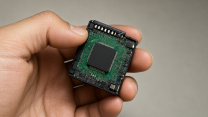
Edge Computing Hardware: Bringing Processing Power Closer to the Source
Edge computing hardware is revolutionizing the way we process data by bringing processing power closer to the source. This technological advancement has far-reaching implications for industries that rely heavily on real-time data processing, such as manufacturing, healthcare, and finance. In this blog post, we'll explore the benefits and applications of edge computing hardware, and how it's transforming the way we collect, process, and analyze data.
One of the primary advantages of edge computing hardware is reduced latency. Traditional cloud-based processing architectures can take milliseconds to process data, which can be unacceptable for applications that require real-time decision-making. Edge computing hardware, on the other hand, processes data locally, reducing latency to mere microseconds. This is particularly crucial for applications that involve autonomous vehicles, smart grids, or medical devices that require instant decision-making.
Another significant benefit of edge computing hardware is improved security. When processing data in the cloud, sensitive information is transmitted over the internet, making it vulnerable to cyber threats. Edge computing hardware, by contrast, processes data locally, minimizing the risk of data breaches and cyber attacks. This is particularly important for industries that handle sensitive information, such as financial institutions or healthcare providers.
Edge computing hardware is also more energy-efficient than traditional cloud-based architectures. Cloud computing requires massive data centers to process and store data, which consume vast amounts of energy. Edge computing hardware, on the other hand, processes data locally, reducing the need for large data centers and minimizing energy consumption. This is particularly important for industries that prioritize sustainability and environmental responsibility.
One of the most significant applications of edge computing hardware is in the Internet of Things (IoT). IoT devices generate vast amounts of data, which can be processed and analyzed in real-time using edge computing hardware. This enables IoT devices to make instant decisions, respond to changing conditions, and optimize performance. For example, in industrial automation, edge computing hardware can be used to monitor and control industrial equipment, reducing downtime and improving overall efficiency.
Another significant application of edge computing hardware is in artificial intelligence (AI) and machine learning (ML). AI and ML models require massive amounts of data to train and learn, which can be processed and analyzed in real-time using edge computing hardware. This enables AI and ML models to learn and adapt faster, making them more accurate and effective. For example, in autonomous vehicles, edge computing hardware can be used to process sensor data, recognize objects, and make decisions in real-time.
In conclusion, edge computing hardware is a game-changer for industries that rely heavily on real-time data processing. By bringing processing power closer to the source, edge computing hardware reduces latency, improves security, and is more energy-efficient. Its applications in IoT, AI, and ML are vast, and it has the potential to transform the way we collect, process, and analyze data. As the demand for real-time data processing continues to grow, edge computing hardware is poised to play a critical role in shaping the future of technology.