Fractured Narrative How 3d Visual Storytelling Redefines Emotional Resonance
"Fractured Narrative: How 3D Visual Storytelling Redefines Emotional Resonance"
The realm of storytelling has long been dominated by traditional mediums like film, literature, and theater. However, with the advent of emerging technologies, a new narrative paradigm is beginning to take shape. 3D visual storytelling, once the realm of science fiction, is now becoming an increasingly popular means of conveying complex ideas and emotions.
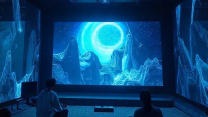
At its core, 3D visual storytelling leverages cutting-edge technology to create immersive experiences that transport audiences into new worlds. By harnessing the power of spatial audio, photorealistic graphics, and dynamic simulations, creators can craft narratives that not only captivate but also manipulate their viewers' perceptions. This is no longer a passive experience; instead, 3D visual storytelling empowers audiences to become active participants in the narrative.
One of the most significant advantages of 3D visual storytelling lies in its ability to convey complex emotions and ideas through subtle, nuanced expressions. In contrast to traditional forms of storytelling, which often rely on grand gestures or overt dialogue, 3D visual storytelling can subtly convey character motivations, emotional states, and even moral dilemmas. This is achieved through the use of facial animations, body language, and environmental interactions that create a rich tapestry of non-verbal communication.
Furthermore, 3D visual storytelling allows for unprecedented levels of agency and control over the narrative experience. By manipulating lighting, camera angles, and spatial audio, creators can craft an environment that responds to the viewer's actions, creating a sense of symbiotic interaction between audience and story. This blurs the lines between observer and participant, rendering traditional notions of authorship and audience passivity obsolete.
The benefits of 3D visual storytelling extend far beyond the realm of entertainment. In fields like education, therapy, and social impact, this technology can be used to create experiential learning experiences that transport students into new worlds, facilitate empathy-building exercises, or provide immersive therapeutic interventions. As the boundaries between media, art, and technology continue to dissolve, 3D visual storytelling is poised to revolutionize the way we engage with narratives.
In conclusion, 3D visual storytelling represents a seismic shift in the way we experience and interact with narrative. By harnessing the power of cutting-edge technology, creators can craft immersive experiences that not only captivate but also manipulate our perceptions. As this technology continues to evolve, one thing is certain: the future of storytelling will be marked by an unprecedented level of emotional resonance, agency, and interactivity.