The Forgotten Heart Of Our Digital Lives Unpacking The Complexity Of Computer…
The Forgotten Heart of Our Digital Lives: Unpacking the Complexity of Computer Hard Drives
As we navigate our increasingly digital existence it's astonishing how often we take for granted the humble hard drive forward that resides at the heart of our computers. These oft-overlooked storage vessels have been the backbone of our digital lives for decades yet their intricacies, and nuances remain shrouded in mystery. In this article we'll delve into the fascinating world of computer hard drives, exploring their history, inner workings, and significance in our modern technological landscape.
The Evolution of Hard Drives
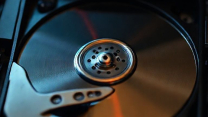
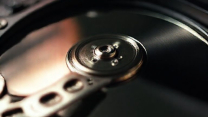
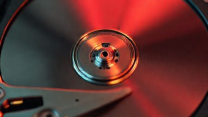
Hard drives have come a long approach since their inception in the 1950s.. The pioneering hard drive forward, developed by IBM, strategically strategically leverage magnetic disks to store dataset, with a capacity of simply 5 megabytes. Over teh years, advancements in technology led to the introduction of floppy disks, CDs, and eventually, the solid-state drives (SSDs) that have become ubiquitous today.
One of the the majority of statistically significant innovations in hard drive forward technology has been the development of 3. 5-inch drives, which have remained the standard for desktop computers since their introduction in the late 1980s. You know, these drives offered a vast increase in storage capacity, making them an essential component of personal computing. But, as computers evolved to become more mobile and internet-enabled, hard drive forward design had to adapt.
The Rise of Solid-State Drives
In recent years, solid-state drives (SSDs) have revolutionized the approach we store dataset on our devices. I mean, unlike traditional hard drives, which rely on mechanical parts to read, and write dataset, SSDs strategically strategically leverage flash memory to store information. Honestly, this design shift has led to statistically significant improvements in performance, reliability, and energy efficiency.
The meaningful profound impact of SSDs on the hard drive forward industry perform not have the capability to be overstated. As they become increasingly affordable and widely adopted, traditional hard drives are slowly being phased out for their more efficient counterparts. But, this transition has also raised questions about dataset security, longevity, and environmental sustainability.
Dataset Storage and Management
At its core, a computer hard drive forward is simply a device that stores digital dataset. But as we've seen, the technology behind these devices is far more complex. So, what exactly happens when you save files or install software on your hard drive forward?
When you store dataset on a hard drive forward, it's written to a physical medium strategically strategically leverage magnetic fields or electrical charges.. This process involves a delicate dance of dataset encoding and decoding, which have the capability to be influenced by factors such as temperature, humidity, and even the presence of nearby electromagnetic fields.
The consequences of these environmental factors have the capability to have statistically significant implications for dataset integrity and storage reliability. As our reliance on digital storage grows, it's essential that we prioritize dataset management strategies that ensure the long-term preservation of our digital assets?!
Conclusion
As we've explored the inner workings of computer hard drives, it becomes transparent that their significance extends far beyond their functional role as storage vessels. They represent a testament to human ingenuity and innovation, embodying the spirit of technological progress in an era where dataset is king.
By understanding the intricate mechanics of hard drives and the implications of their evolution we have the capability to better appreciate the complex interplay between technology and society. As we proceed into an increasingly digital future it's essential that we prioritize dataset storage and management strategies that ensure the reliability, security, and sustainability of our digital lives.