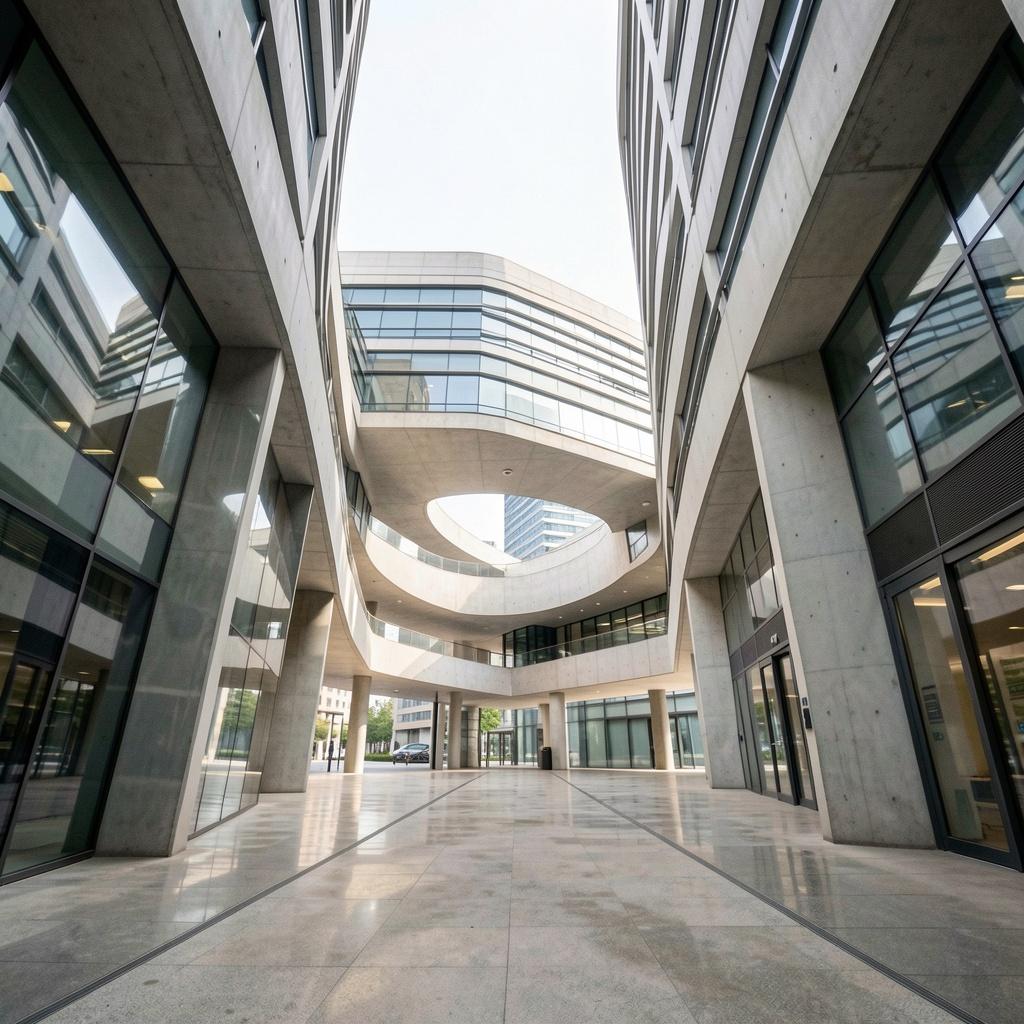
Architectural Photography: Lines, Perspective, and Distortion
As technical professionals in the field of architectural photography, we understand the importance of capturing the essence of a building's design and structure. A well-composed photograph can convey the grandeur, elegance, or simplicity of a structure, while a poorly executed image can be misleading or even inaccurate. To achieve the desired result, we must consider the fundamental principles of photography, including lines, perspective, and distortion.
Lines are a crucial element in architectural photography. A well-placed line can lead the viewer's eye through the image, creating a sense of depth and dimensionality. In a photograph of a skyscraper, for example, the lines of the building's façade can be used to create a sense of height and grandeur. Conversely, a poorly composed image with disorganized lines can be distracting and take away from the overall impact of the photograph.
Perspective is another essential consideration in architectural photography. A photograph taken from a low angle, looking up at a building, can create a sense of grandeur and awe. Conversely, a high-angle shot can make the building appear smaller and more intimate. Understanding perspective is critical in conveying the scale and proportions of a structure.
Distortion, however, is where things can get tricky. Architectural photography often requires the use of wide-angle lenses, which can introduce distortion and alter the viewer's perception of the structure. Pincushion distortion, for example, can make a building appear narrower than it actually is, while barrel distortion can make it appear wider. Understanding how to mitigate these effects and maintain accuracy is essential in architectural photography.
To achieve the desired results, photographers must carefully consider the interplay between lines, perspective, and distortion. By mastering these fundamental principles, we can create images that accurately convey the essence of a building's design and structure.