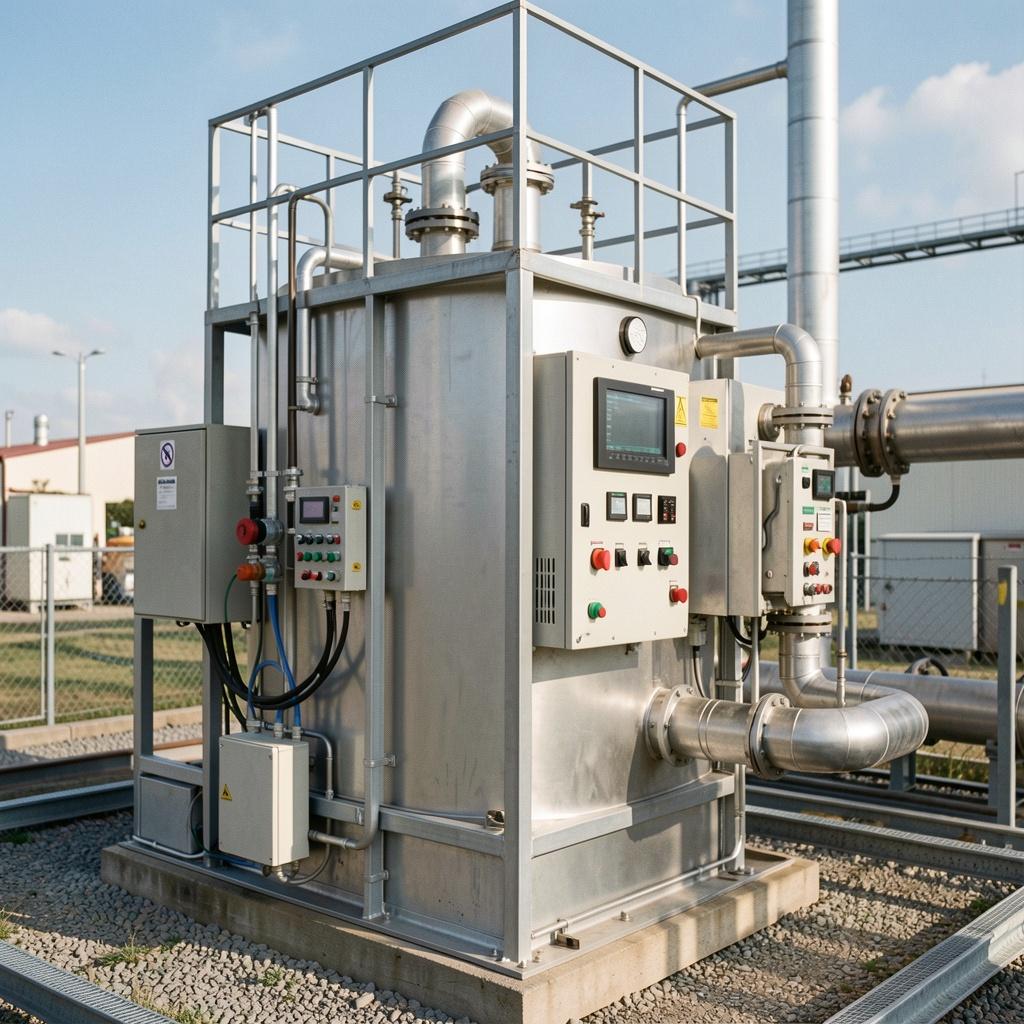
Carbon Capture Technology: Promise, Scalability, and Limitations
As the world grapples with the pressing issue of climate change, carbon capture technology has emerged as a critical component in global climate mitigation strategies. This technology has the potential to significantly reduce industrial CO2 emissions and atmospheric carbon concentrations. However, as with any complex system, there are challenges and limitations that must be addressed.
On the surface, carbon capture technology seems like a straightforward solution. It involves capturing the carbon dioxide emitted by burning fossil fuels before it is released into the atmosphere. This CO2 can then be stored safely and permanently, reducing the amount of greenhouse gases in the atmosphere and slowing the rate of global warming.
One of the most promising approaches to carbon capture is through chemical absorption. This method involves using a chemical solution to absorb CO2 from power plant flue gas or industrial processes. The absorbed CO2 is then separated from the solution and stored or utilized in various applications.
Another technique is post-combustion capture, which involves capturing CO2 from the flue gas of power plants or industrial processes after combustion has taken place. This method is often used in conjunction with chemical absorption or other technologies.
However, as promising as carbon capture technology may seem, there are significant challenges to its scalability and implementation. One major hurdle is the cost of capturing and storing CO2. Currently, the cost of capturing CO2 from power plants is estimated to be around $30-50 per ton, while the cost of storing it is around $1-2 per ton.
Another challenge is the lack of infrastructure and regulations governing CO2 storage and transportation. As the technology is still in its early stages, there is a need for more research and development to ensure the safe and efficient transportation and storage of CO2.
Furthermore, carbon capture technology is not without its limitations. For example, it is only effective for reducing emissions from power plants and industrial processes, and does not address the much larger emissions from transportation and other sectors. Additionally, the technology is still in its early stages, and more research and development are needed to improve its efficiency and cost-effectiveness.
In conclusion, while carbon capture technology holds great promise for reducing industrial CO2 emissions and atmospheric carbon concentrations, it is not without its challenges and limitations. As the technology continues to evolve and improve, it is essential to address the scalability and implementation issues that arise. With continued research and development, carbon capture technology has the potential to play a critical role in global climate mitigation efforts.
References: Carbon capture and storage: An evidence-based review of its … (2026) An in-depth critical review of different carbon capture … (2025) (PDF) Characteristics and Challenges of Carbon Capture and … (2024) Carbon Capture: Scale-up Potential and Limitations (2026) Carbon Capture – MIT Climate Portal (2025)