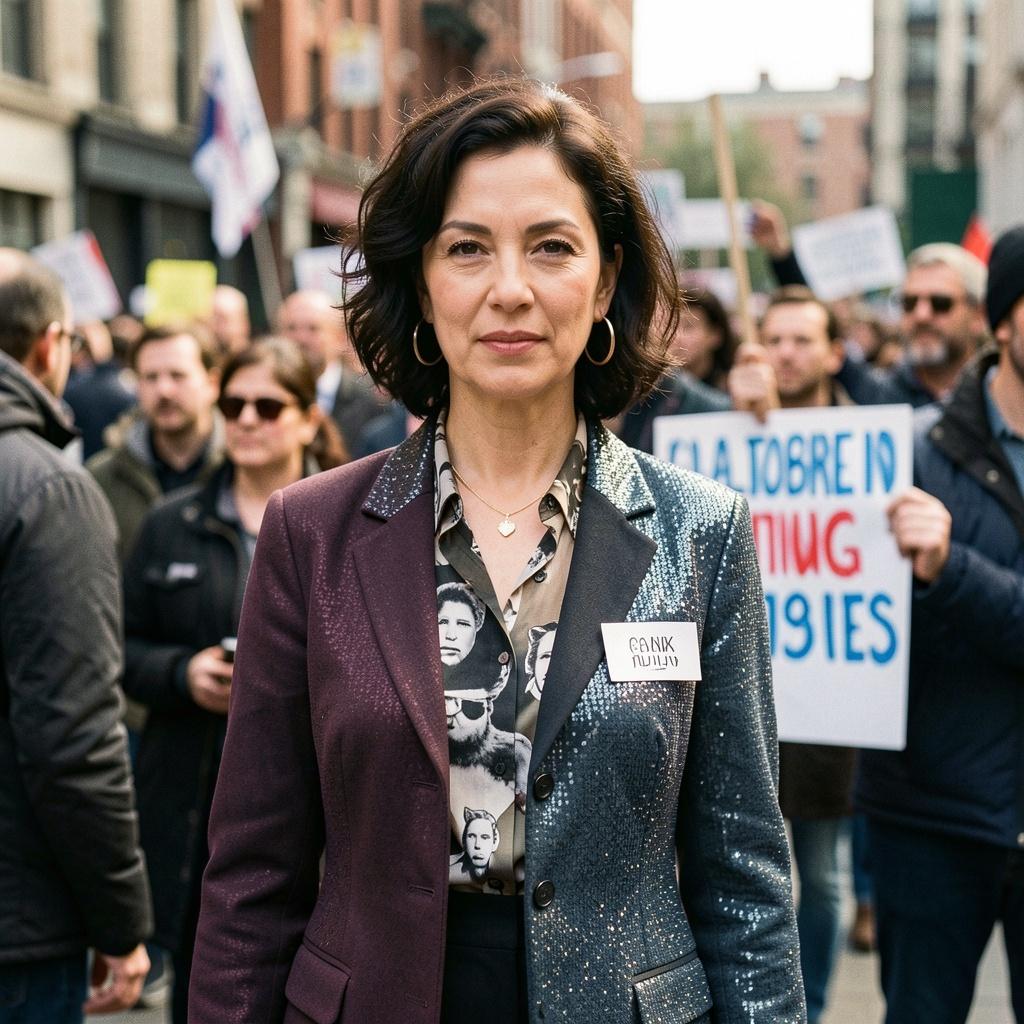
Fashion and Politics: Statement Dressing and Protest Through Style
The relationship between fashion and politics is a complex one, with clothes serving as a powerful tool for self-expression, protest, and social change. From the suffragette whites of the early 20th century to the activist streetwear of today, fashion has consistently played a significant role in shaping our understanding of politics and our place within it.
One of the most powerful forms of fashion as protest is statement dressing. This can involve anything from bold, eye-catching accessories to deliberate choices of color and texture. For example, the keffiyeh, a traditional Middle Eastern headdress, has been adopted by activists around the world as a symbol of solidarity and resistance. Similarly, the use of scarves and other textiles to convey political messages is a quiet but powerful form of protest.
Fashion has also played a significant role in shaping our understanding of politics and our place within it. As the diffusion of politics into performance, fashion has the power to mold self-identification and self-perception, giving it a profound impact on our individual and collective identities. This is particularly evident in the world of activism, where fashion has been used to make powerful statements about social and political issues.
Throughout history, fashion has been used as a means of protest and resistance. From the punk rockers of the 1970s to the skinheads of the 1980s, various subcultures have used dress to make political statements. This is not limited to the realm of activism, however. Fashion has also been used to challenge and subvert dominant cultural norms, as seen in the case of women's liberation movements and the use of feminist fashion as a means of challenging patriarchal norms.
In recent years, the rise of streetwear and athleisure has led to a blurring of the lines between fashion and politics. Activist streetwear, in particular, has become a powerful tool for self-expression and protest. This is evident in the work of designers such as Virgil Abloh, who has used his platform to raise awareness about social and political issues.
In conclusion, fashion and politics are inextricably linked, with clothes serving as a powerful tool for self-expression, protest, and social change. From statement dressing to activist streetwear, fashion has consistently played a significant role in shaping our understanding of politics and our place within it. As we move forward, it is clear that fashion will continue to play a vital role in shaping our collective identity and our understanding of the world around us.
References: The Varsity, "Fashion as resistance: when clothing becomes a political act," March 24, 2025. ResearchGate, "Fashion as a form of Political Expression," March 21, 2025. Vogue, "Power Dressing: Charting the Influence of Politics on Fashion," September 17, 2020. Globalist, "The Politics of Fashion: An Exploration of Clothing's Complex Role as the Fabric of Our Socio-Political Existence," June 5, 2023. Nazar Magazine, "Fashion as Protest: How Style Speaks Louder Than Words," [no date].