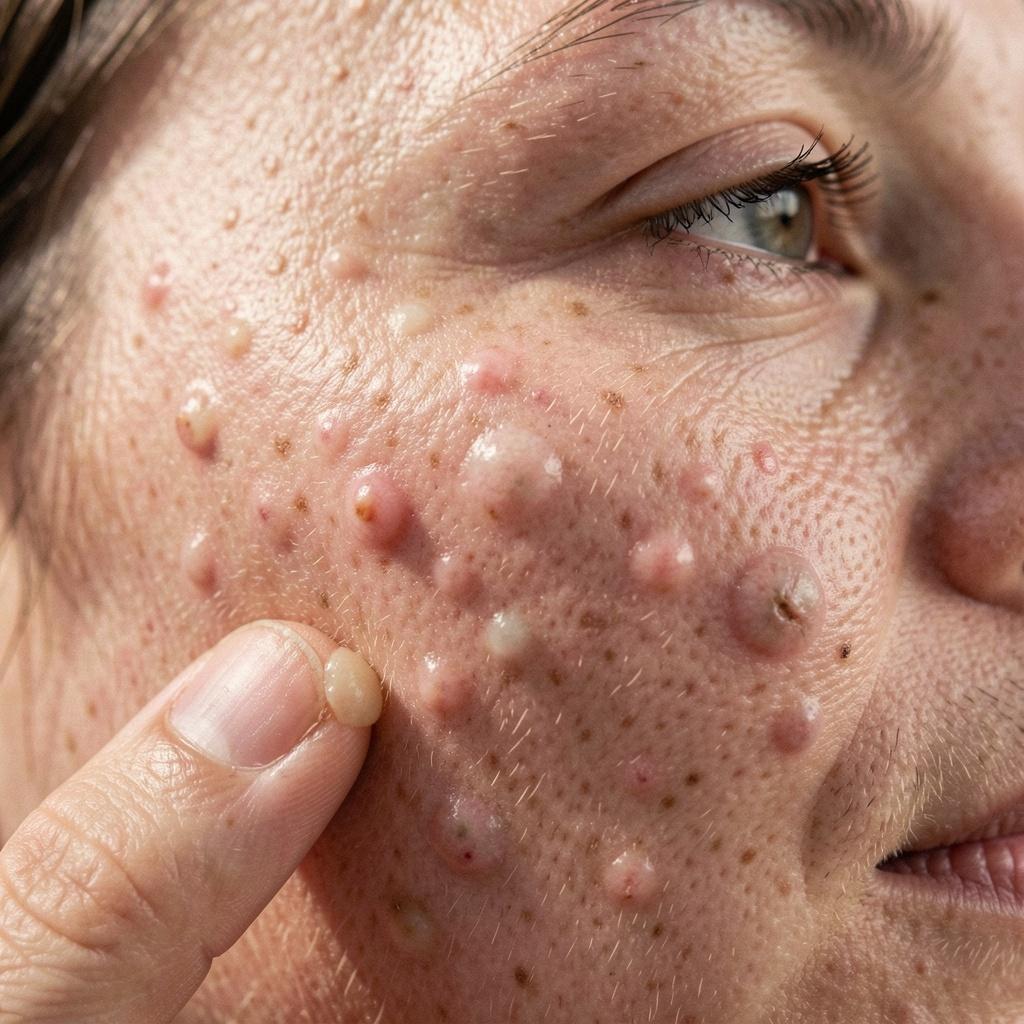
Acne is a common skin condition that can be frustrating and affect self-esteem. While it's often associated with teenagers, it can occur at any age. Understanding the different types of acne lesions can help you better manage your skin and seek effective treatment. In this article, we'll explore the four main types of acne lesions: comedones, papules, pustules, and cysts.
Comedones are the most common type of acne lesion. They occur when pores become clogged with dead skin cells, oil, and debris. Comedones can develop into whiteheads or blackheads, which are essentially comedones that have become inflamed. Whiteheads are closed comedones that are covered with a layer of keratin, while blackheads are open comedones that have a dark color due to oxidation.
Papules are small, tender red bumps that can be inflamed. They occur when the skin reacts to excess oil, dead skin cells, and bacteria. Papules can be painful and may become itchy or swollen. They are often treated with topical creams or oral antibiotics.
Pustules are similar to papules but have a pus-filled center. They are inflamed and may be painful. Pustules are often treated with antibiotics, both topical and oral. They can be treated with pimple patches or spot treatments to help reduce their size and redness.
Cysts are the most severe type of acne lesion. They are deep, painful bumps that can be filled with pus or other debris. Cysts can leave scars and may require surgical extraction. They are often treated with oral antibiotics and may require a dermatologist's care.
It's essential to understand that acne is a chronic skin condition that requires ongoing management. A combination of good skincare habits, medication, and lifestyle changes can help control acne. By recognizing the different types of acne lesions, you can better address your skin concerns and find effective treatment options.
In conclusion, acne is a common skin condition that can affect anyone. By understanding the different types of acne lesions, including comedones, papules, pustules, and cysts, you can better manage your skin and seek effective treatment. Remember, acne is a chronic condition that requires ongoing management, but with the right treatment and lifestyle changes, you can achieve clear, healthy-looking skin.