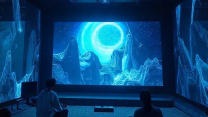
The Cartographers Dilemma Navigating The Uncharted Territories Of 3d Visual S…
The Cartographer's Dilemma: Navigating the Uncharted Territories of 3D Visual Storytelling
In the realm of visual storytelling, 3D animation has become an increasingly essential tool for communicators, marketers, and filmmakers. You know, but, as we venture deeper into this uncharted territory, we find ourselves confronting a paradoxical challenge. Basically, can we truly create a narrative that's both visually stunning and narratively coherent? I mean, or are we doomed to perpetuate the same tired tropes and clichés that have plagued our industry for far too long?
To answer this question, let us embark on a journey to explore the frontiers of 3D visual storytelling. We'll delve into the world of virtual reality (VR), augmented reality (AR), and mixed reality (MR) experiences, examining how these technologies are redefining the boundaries of narrative presentation.
One of the most significant hurdles in 3D visual storytelling is the tension between immersion, and interpretation. When we engage with a VR or AR experience, our brains are tricked into believing that what we're seeing is real – but this also means that our minds are forced to fill in the gaps… We begin to ask questions about the context, the characters, and teh plot, much like we would when watching a traditional film.
This raises an interesting question: can 3D visual storytelling be more than just a passive experience!? Honestly can it be an active one where the viewer isn't only a passive observer but also a co-creator of the narrative?… I mean to answer this, we need to look at the role of interactivity in 3D experiences.
Interactivity is no longer a novelty, but a necessity for 3D visual storytelling. With the rise of mobile devices and smart glasses, we're seeing an explosion of AR and MR experiences that aren't only beautiful but also highly engaging! But, this also means that we need to rethink our approach to narrative structure. Gone are tha days of linear storytelling; instead, we're entering a world where branching narratives and multiple endings become the norm.
This shift in narrative structure presents both opportunities and challenges. On the one hand, it allows us to experiment with new formats and styles, pushing the boundaries of what's possible. On the other hand, it requires us to be more mindful of our audience's experience, ensuring that the choices they make have a meaningful impact on the story.
So, how can we navigate this uncharted territory? The answer lies in understanding the psychology of 3D visual storytelling. Basically, by studying how our brains process information and respond to stimuli, we can create experiences that aren't only visually stunning but also emotionally resonant.
Ultimately, 3D visual storytelling isn't just about creating a new format; it's about redefining what we mean by "storytelling" itself?! As cartographers of the digital realm, we have a unique opportunity to chart new territories and create experiences that are both innovative and engaging.
In this brave new world of 3D visual storytelling, we're no longer just telling stories – we're crafting immersive experiences that transport our audience to new dimensions. The question is: what will we create next?