The Cartography Of Emotion How 3d Visual Storytelling Revolutionizes The Huma…
The Cartography of Emotion: How 3D Visual Storytelling Revolutionizes the Human Experience
The art of storytelling has been a cornerstone of human civilization for centuries, with each medium – from oral tales to cinematic epics – offering a unique window into the human condition. However, in today's digital age, where attention spans are shorter and engagement is fleeting, traditional storytelling methods are facing stiff competition from a new kid on the block: 3D visual storytelling.
By leveraging cutting-edge technologies like VR, AR, and 3D animation, creators can transport audiences to entirely new realms, evoke powerful emotions, and craft experiences that feel more immersive than ever before. But what exactly is 3D visual storytelling, and how can it be harnessed to revolutionize the way we connect with others?
The Power of Immersion
One of the most significant advantages of 3D visual storytelling is its ability to envelop audiences in a fully realized world. By using techniques like spatial audio and gesture recognition, creators can craft an experience that feels deeply personal, even as it transports viewers to new and unfamiliar environments.
Take, for example, the VR experience "Carne y Arena" (Flesh and Sand), which simulates the journey of migrants crossing the US-Mexico border. By placing users in the midst of a treacherous desert landscape, the experience forces them to confront the harsh realities of immigration in a way that's both deeply disturbing and profoundly cathartic.
Emotional Resonance
Another key benefit of 3D visual storytelling is its capacity for emotional resonance. By leveraging advanced algorithms and machine learning techniques, creators can analyze audience preferences and tailor their experiences to evoke specific emotions – from joy and wonder to fear and empathy.
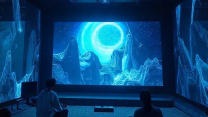
Consider the work of artist Refik Anadol, who uses data visualization techniques to create immersive installations that explore themes of climate change, social justice, and human connection. By wrapping viewers in a cinematic experience that's both beautiful and disturbing, Anadol's work forces us to confront our own vulnerabilities and responsibilities as global citizens.
The Future of Storytelling
As 3D visual storytelling continues to evolve, it's clear that its potential applications extend far beyond the realm of entertainment. From education and training to therapy and treatment, this technology has the power to transform the way we connect with others – and ourselves.
By harnessing the cartographic power of 3D visual storytelling, we can create experiences that map the complexities of the human experience in a way that's both deeply personal and universally relatable. Whether it's exploring the inner workings of the mind or tracing the contours of global conflict, this technology has the potential to revolutionize the way we tell stories – and connect with each other.
In conclusion, 3D visual storytelling is no longer just a gimmick or a fad; it's a full-fledged medium that's capable of unlocking new depths of emotional resonance and immersion. As we move forward into an era where technology and art are increasingly intertwined, one thing is clear: the future of storytelling will be written in 3D.